
The BYD Han EV is one of the most recognizable electric sedans to come out of China’s rapidly developing new-energy vehicle industry. It combines a large battery, dual-motor all-wheel drive, advanced driver assistance systems, intelligent cabin technology, and a premium-oriented design into a single package. More importantly, the Han EV reflects how electric vehicle technology has moved beyond simply replacing an internal combustion engine with a battery.
For international buyers, fleet operators, and automotive distributors, understanding the technology behind the BYD Han EV is important when evaluating its suitability for different markets. At Wuhan Xinyuanhe Auto Sales Service Co., Ltd., based in Wuhan, Hubei Province, our team has been working in the automotive industry for more than ten years. We export more than 50 automotive brands and provide a broad range of products, including new vehicles, used cars, auto parts, electric vehicle charging equipment, modified vehicles, and commercial vehicles.
With export operations covering more than 50 countries and regions across the Middle East, Central Asia, Eastern Europe, Southeast Asia, Africa, and South America, we have seen firsthand that EV buyers are looking for more than attractive styling. They want practical information about battery technology, charging, driving performance, reliability, and long-term usability.
This article takes a closer look at the technology that makes the BYD Han EV stand out.
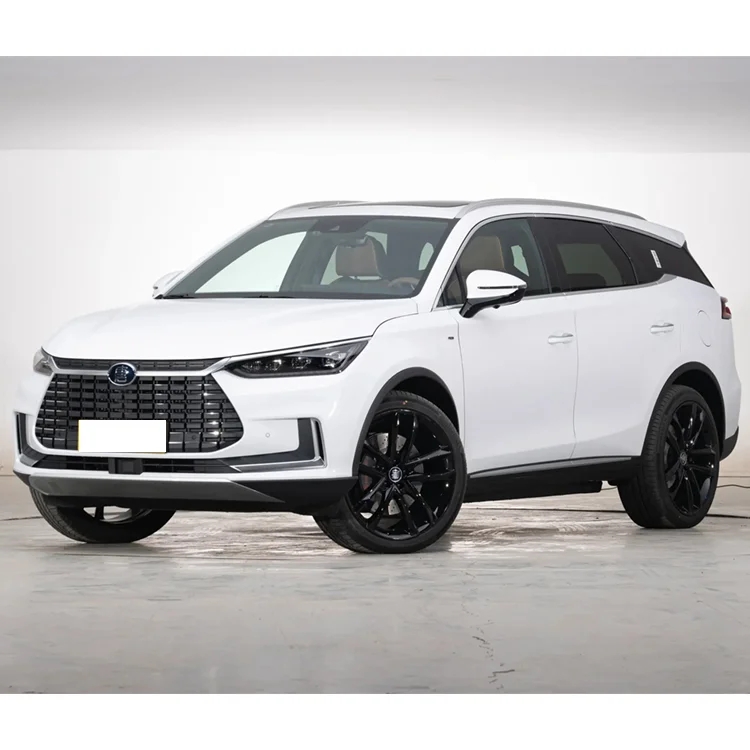
1. The Blade Battery: A Key Part of BYD’s EV Technology
One of the most important technologies associated with BYD electric vehicles is the Blade Battery. Unlike traditional lithium-ion battery packs that often use conventional cell formats, the Blade Battery uses long, thin lithium iron phosphate (LFP) cells arranged in a highly integrated structure.
The choice of LFP chemistry offers several practical advantages. It is known for good thermal stability and durability, making it well suited to electric vehicles that need to operate reliably in different climates. This can be particularly relevant for international markets where vehicles may be exposed to high temperatures, long-distance driving, or demanding road conditions.
Battery safety is also a major consideration for EV customers. BYD has focused heavily on battery structural integrity and thermal management. For overseas buyers, this is not simply a technical specification. It affects how confidently the vehicle can be used for daily commuting, business travel, and long-distance journeys.
The Han EV’s battery system is integrated with the vehicle’s overall electronic architecture, helping the car deliver a balance between driving range, performance, and energy efficiency.
2. Dual-Motor All-Wheel Drive and Electric Performance
The higher-performance versions of the BYD Han EV use a dual-motor all-wheel-drive system. This configuration places an electric motor on each axle, allowing the vehicle to distribute power electronically between the front and rear wheels.
Compared with a conventional mechanical four-wheel-drive system, an electric all-wheel-drive layout can respond extremely quickly to changes in traction and driving conditions. The control system can adjust motor output almost instantly, helping improve acceleration and stability.
This technology is useful beyond performance driving. In regions with wet roads, uneven surfaces, or occasional snow, all-wheel drive can provide additional traction when needed. At the same time, the system can operate efficiently during normal driving rather than relying on a continuously engaged mechanical drivetrain.
The instant torque characteristics of electric motors also give the Han EV a different driving experience from a conventional gasoline-powered sedan. Power delivery is immediate, while the absence of a traditional multi-speed transmission creates smooth acceleration.
For international distributors, this combination of performance and everyday usability makes the Han EV a vehicle worth considering for markets where customers are increasingly interested in premium electric sedans.
3. Intelligent Energy Management
An EV’s real-world performance depends on more than battery capacity. The vehicle must manage energy efficiently across different driving situations.
The BYD Han EV uses an integrated energy management system to coordinate the battery, electric motors, regenerative braking, thermal management, and other electrical components. When the driver lifts off the accelerator or applies the brakes, the electric motors can work as generators, converting part of the vehicle’s kinetic energy back into electrical energy.
This regenerative braking system helps recover energy that would otherwise be lost as heat through conventional friction brakes. It can also reduce brake wear over time.
For drivers who regularly travel through urban areas, regenerative braking can make stop-and-go traffic more efficient. For long-distance driving, the overall energy management strategy becomes important in maintaining predictable range and reducing unnecessary energy consumption.
However, actual driving range always depends on factors such as speed, temperature, road conditions, driving style, passenger load, and air-conditioning use. This is an important point for international buyers: official range figures should be considered as reference data rather than a guarantee of real-world results in every country.
4. Advanced Driver Assistance Technology
The BYD Han EV also incorporates a range of advanced driver assistance features. Depending on the specific model year and market configuration, these systems may include adaptive cruise control, lane-related assistance, collision warning, automatic emergency braking, blind-spot monitoring, and parking assistance.
These technologies use a combination of cameras, radar sensors, ultrasonic sensors, and software algorithms to monitor the vehicle’s surroundings and assist the driver.
The purpose of these systems is not to replace the driver. Instead, they are designed to reduce workload and provide additional support in situations such as highway cruising, traffic congestion, lane changes, and parking.
For overseas markets, buyers should pay attention to the exact configuration of the vehicle being imported. Driver assistance functions can vary by model year, trim level, software version, and destination market. Before placing an order, it is sensible to confirm the equipment list and available functions for the specific vehicle.
5. A Technology-Focused Interior
Inside the Han EV, technology is not limited to the powertrain. The cabin is designed around digital interaction, with a large central display, digital instrumentation, connectivity functions, and voice-based controls depending on configuration.
The large infotainment screen provides access to navigation, media, vehicle settings, and other functions. The digital interface is intended to reduce the need for multiple physical controls while giving drivers access to a wide range of vehicle information.
At the same time, the Han EV demonstrates an important trend in modern Chinese EV development: the vehicle is increasingly treated as a software-driven electronic platform.
For export markets, however, software compatibility deserves careful attention. Navigation services, language options, connectivity features, app support, and regional software functions may differ between countries. Importers should therefore confirm local compatibility before purchasing vehicles in volume.
6. Charging and Daily Usability
Charging infrastructure is one of the biggest factors influencing EV adoption. A technically advanced electric vehicle still needs convenient access to suitable charging facilities.
The BYD Han EV supports external charging through its charging system, allowing owners to recharge the battery at home, at workplaces, or at public charging stations, depending on local infrastructure and charging equipment.
For international customers, charging standards and connector types are particularly important. Different regions may use different charging systems, and compatibility should be checked before export.
This is one reason why the broader EV supply chain matters. Wuhan Xinyuanhe Auto Sales Service Co., Ltd. is involved not only in vehicle exports but also in electric vehicle charging equipment and related automotive products. This allows customers to consider vehicles and charging solutions as part of a wider automotive sourcing strategy.
7. How the Han EV Fits into the International EV Market
The BYD Han EV represents a shift in the global automotive industry. Chinese manufacturers are no longer competing only on manufacturing scale. They are increasingly developing their own battery technologies, electric powertrains, software platforms, and intelligent vehicle systems.
For international dealers, the key question is whether a particular EV can meet the practical requirements of its target market.
Factors such as battery chemistry, charging compatibility, after-sales support, spare parts availability, software localization, and transportation logistics all matter. A vehicle that performs well on paper still needs a reliable supply chain behind it.
For buyers interested in exploring BYD’s broader electric vehicle lineup, the BYD Tang EV is another model that demonstrates the company’s approach to combining electric performance, intelligent technology, and practical vehicle design. More information can be found here:
BYD Tang EV AWD New Energy Electric Car
8. Why Work with an Experienced Automotive Export Partner?
International vehicle sourcing involves much more than selecting a model. Different countries have different requirements for vehicle specifications, customs procedures, shipping arrangements, certification, and registration.
Wuhan Xinyuanhe Auto Sales Service Co., Ltd. is a comprehensive international automotive trading company based in Wuhan, Hubei Province. With more than ten years of experience in the automotive industry, the company exports over 50 automotive brands and works with more than 200 dealers worldwide.
Its business covers more than 50 countries and regions, including the Middle East, Central Asia, Eastern Europe, Southeast Asia, Africa, and South America. Annual export volume has reached approximately 3,000 vehicles.
The company provides multiple vehicle export methods to meet the import requirements of different markets and customers. Its product range includes new vehicles, used cars, auto parts, EV charging piles, modified vehicles, and commercial vehicles.
For overseas dealers and fleet customers, this broader capability can simplify the sourcing process. Instead of treating vehicle procurement as an isolated transaction, customers can work with an experienced export partner that understands different product categories and international logistics requirements.
Final Thoughts
The BYD Han EV is more than a battery-powered sedan. Its technology combines LFP battery chemistry, an integrated electric powertrain, dual-motor all-wheel drive, regenerative braking, intelligent energy management, driver assistance systems, and a digitally focused interior.
For international buyers, the most important takeaway is that EV technology should always be evaluated in the context of the target market. Battery performance, charging compatibility, software functions, road conditions, climate, maintenance, and parts supply all influence the long-term ownership experience.
As electric vehicle adoption continues to expand across the Middle East, Central Asia, Eastern Europe, Southeast Asia, Africa, and South America, models such as the BYD Han EV are becoming increasingly relevant to international automotive distributors.
With more than a decade of experience and an established network of over 200 dealers, Wuhan Xinyuanhe Auto Sales Service Co., Ltd. is positioned to support overseas customers looking to source Chinese vehicles and automotive products. Whether the requirement involves new energy vehicles, used cars, commercial vehicles, charging equipment, or automotive parts, a professional export partner can help make the process more practical and better aligned with the needs of each individual market.